WW (Weight Watchers)
Tracking food: data systems
Tracking food: data systems
Role: Lead product designer
Client: WW (Weight Watchers)
Date: 2022-2023
Tracking food and simplifying food choices is the core of the WW program. Members rely on clear & accurate information when recounting what they have eaten to enable them to make informed choices and build healthy eating habits.
Checking the results
Looking back at what we learned
Tracking habit formation
Avg time to track
- The perfection mindset while tracking often resulted in frustration and fatigue when members encountered any information that didn’t match their expectations
- Estimation and a “close enough” mindset was key for members that tracked the most consistently
- Members were 28% more likely to build a consistent tracking habit when using estimation based experience
- Business and member needs can often grow past what can be supported by long existing infrastructure
The Task
Simplify accurate food logging for members
While logging food in the WeightWatchers app began as a relatively simple process, rapid expansion and growth meant the process was no longer simple or straightforward.
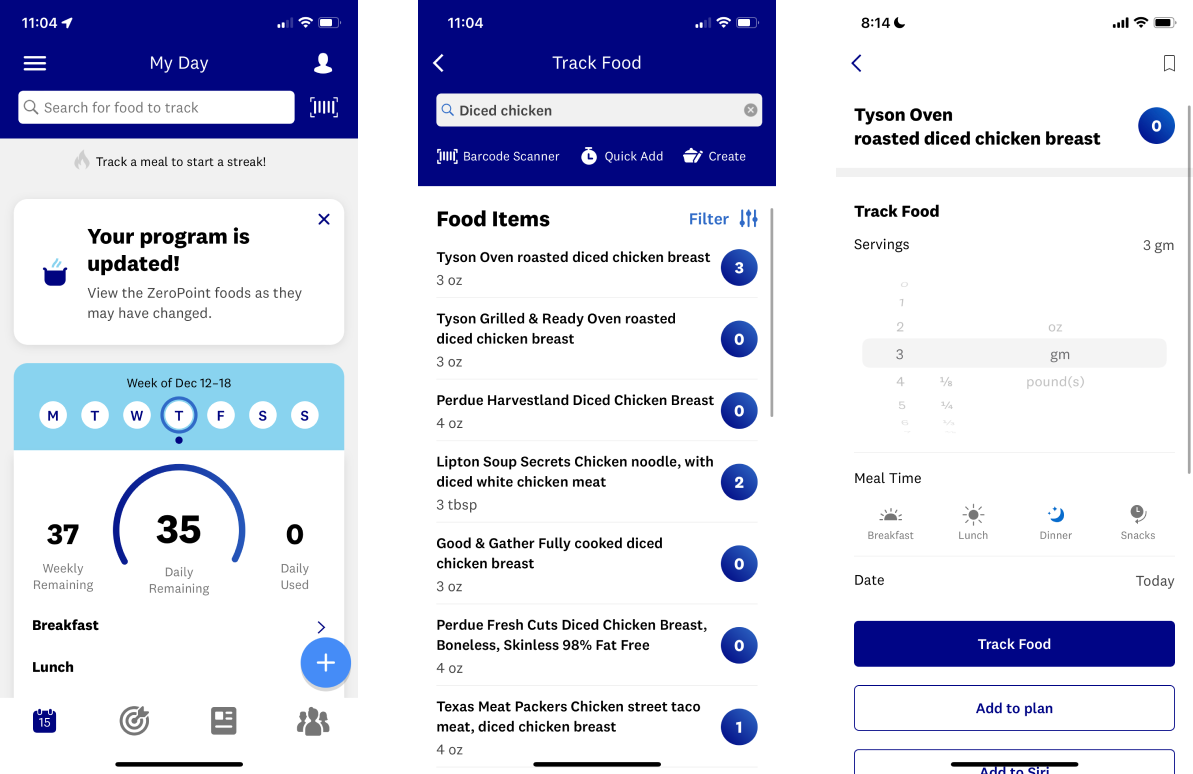
The Challenge
An issue of scale
Through a few observational studies we found that the main obstacle for members was something a bit complex and partially rooted in behavior
- Members expected to be able to reflect what they ate as perfectly as possible, wanting every detail of their meal being reflected
- This sense of perfection meant that if any detail of a search result wasn’t fully in line with their real life experience, that search result item was wrong
- The more search results were made available, the worse the problem got
So any search a member conducted, would result in tons of seemingly similar results, all with slightly different names and information. Making it very difficult to know which is the right one to represent what they ate.
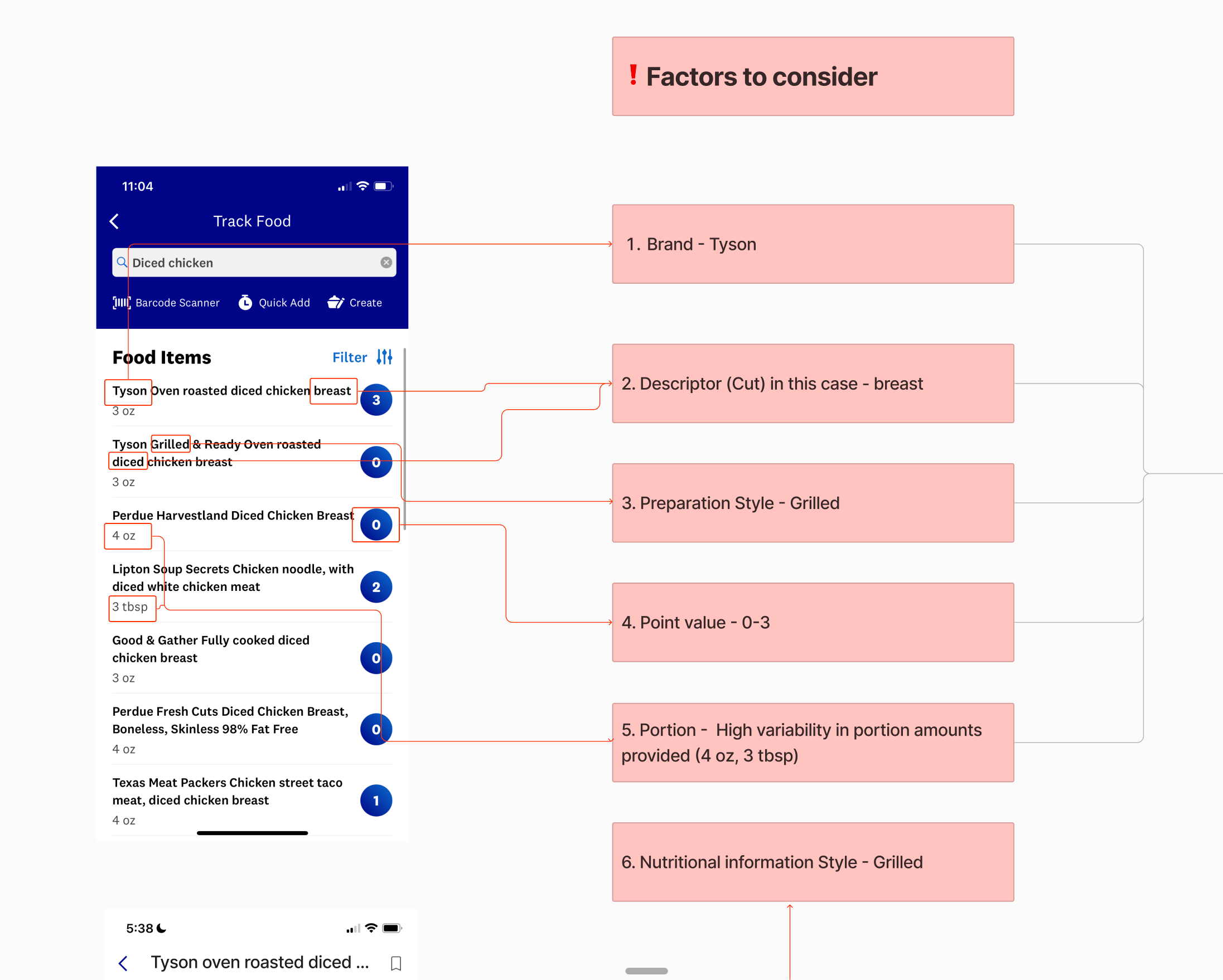
There were a lot of the factors a member had to consider when trying to find the right food – and that was assuming it existed in the first place.
- Brand | Descriptors | Preparation | Point values | Portion amount | Nutrition info | more…
Each of these factors needed to be understood and compared all at the same time, which often resulted in fatigue and giving up.
The Hurdles
Looking under the surface
When looking at why the experience works this way, we quickly saw that food data is at the root of the problem at scale.
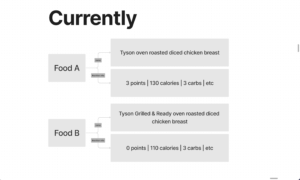
Each individual search result represented a combination of ingredients with varying quantities, preparations, and point values.
Any change to any of those factors required a new separate search result to represent it .
With millions of search results inputted and thousands being added every month, members became quickly overwhelmed by countless similar search results and our team found it near impossible to clean up the database with any existing machine learning or data science model.
The Solution
Reflecting real life through data
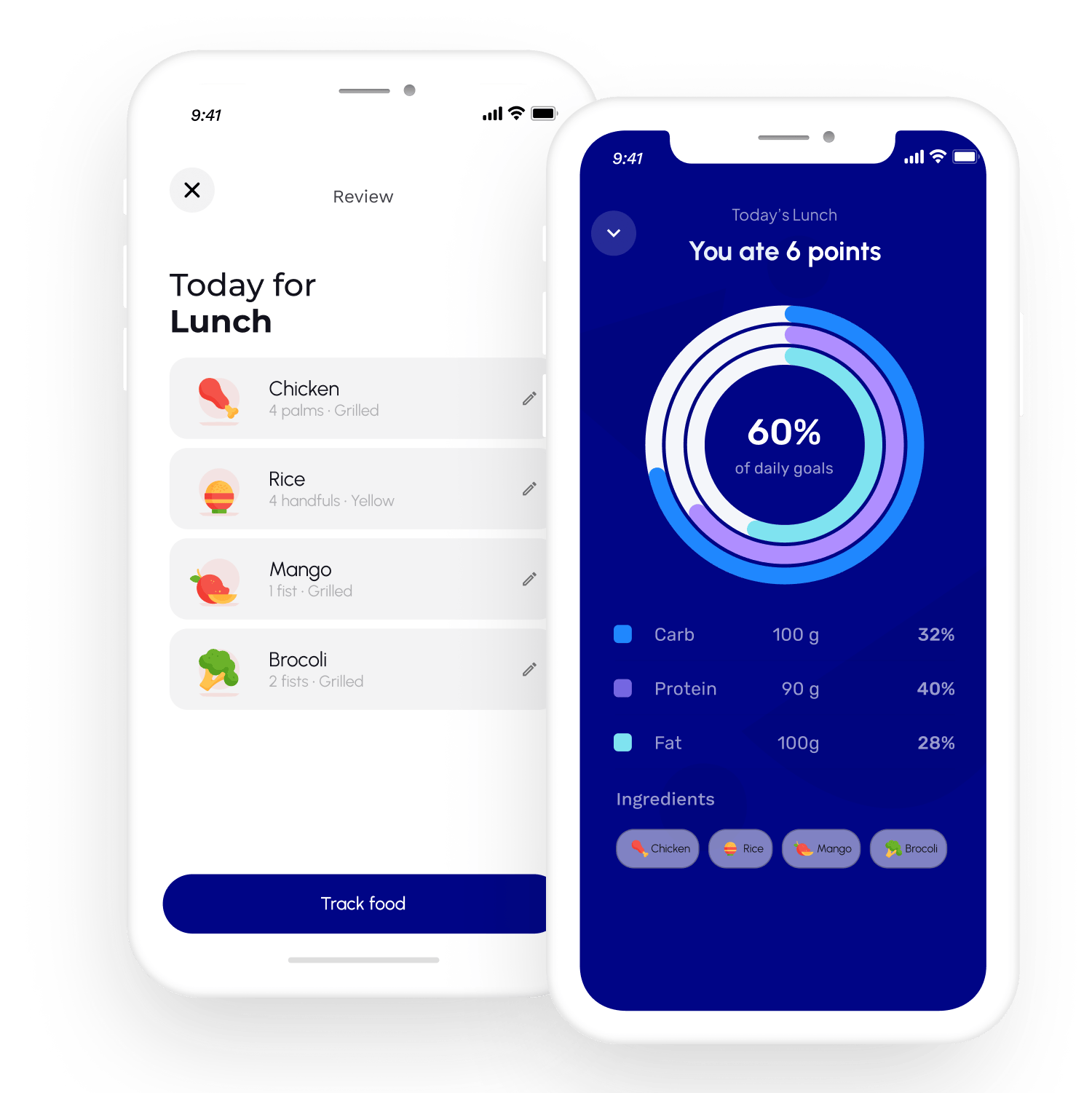
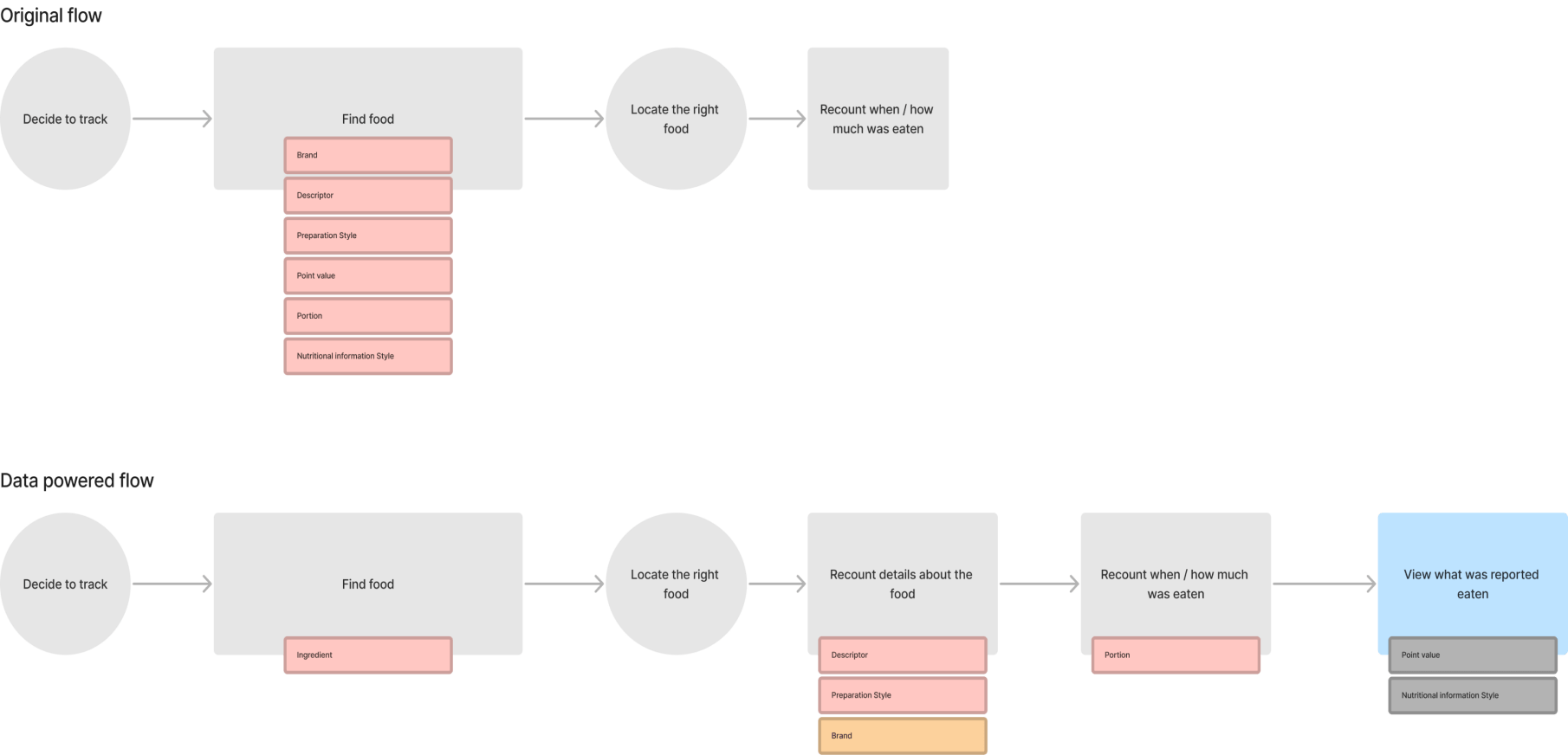
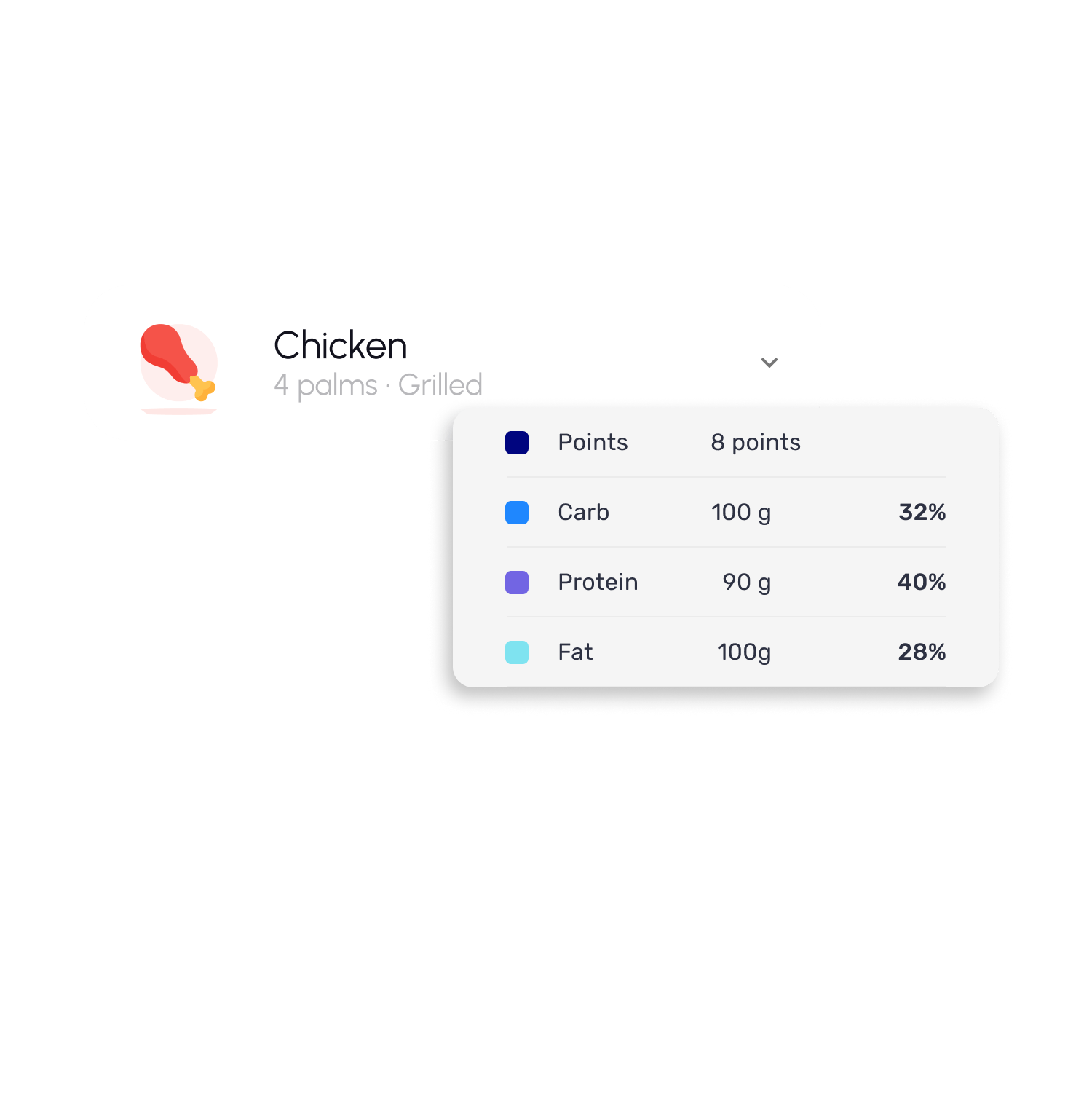
By establishing base ingredients with nutritional details, and then systematically layering in factors like cooking method and amount, it allowed members to combine those ingredients in the experience to best reflect what they ate.
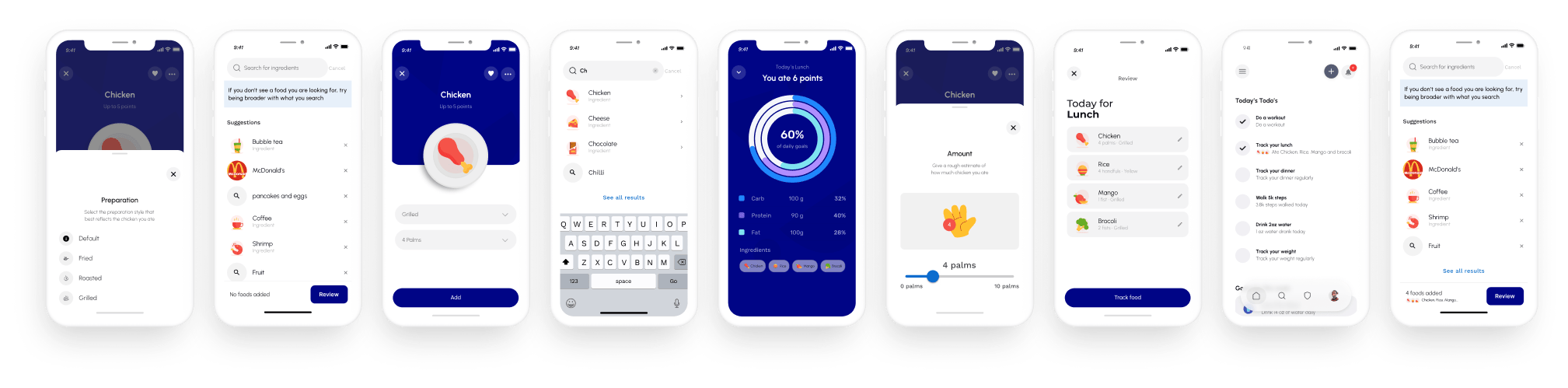
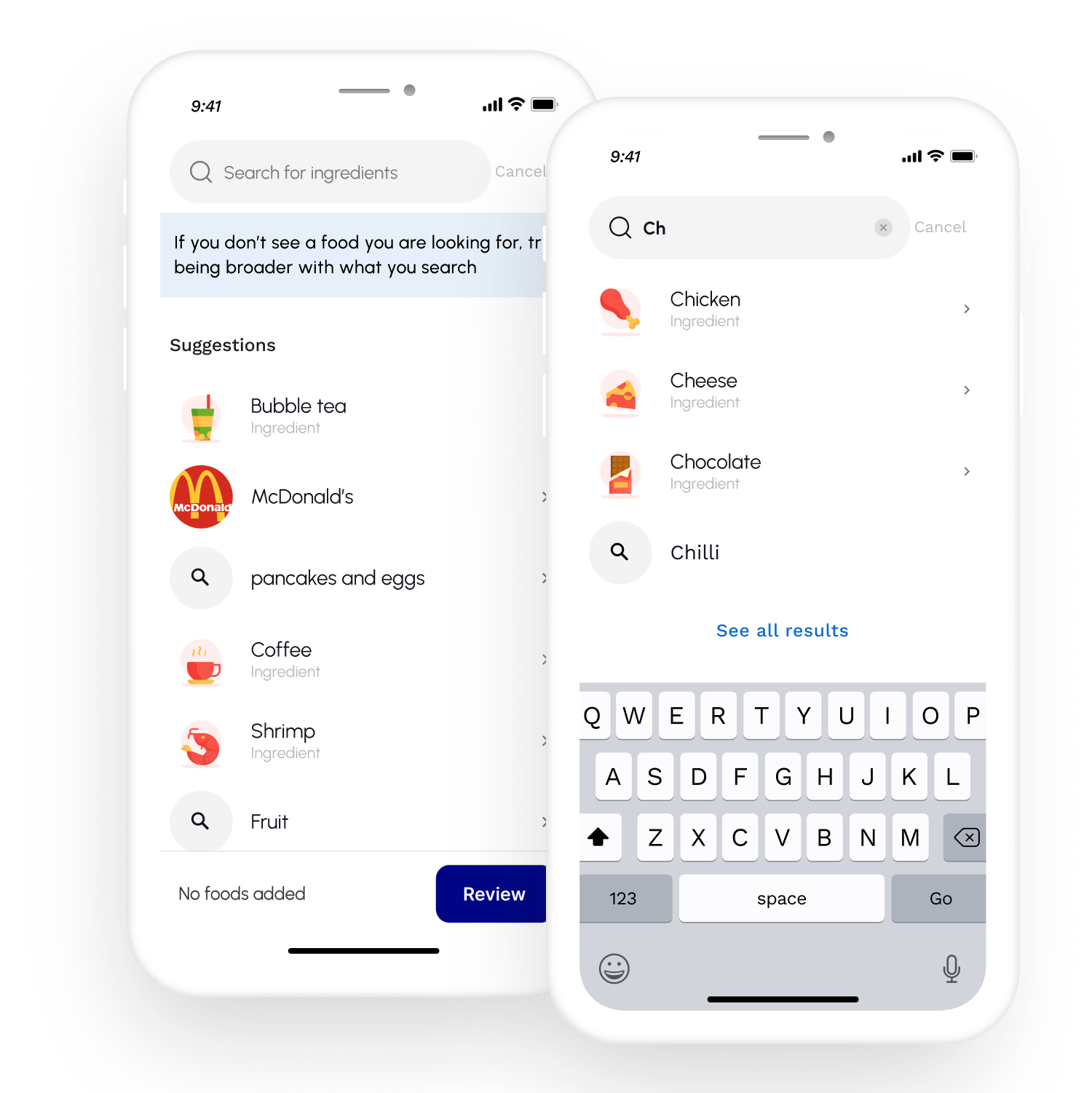
Members were able to find ingredients, customize their details, and build a reflection of what they ate in an easy step-by-step experience without having to compare dozens of similar search results.
The foundation
Tons of ingredients each with specific nutritional value
Step 1
Search for an ingredient
Step 2
Provide details about the ingredient

Step 3
Review what you’ve eaten and learn about your nutrition